
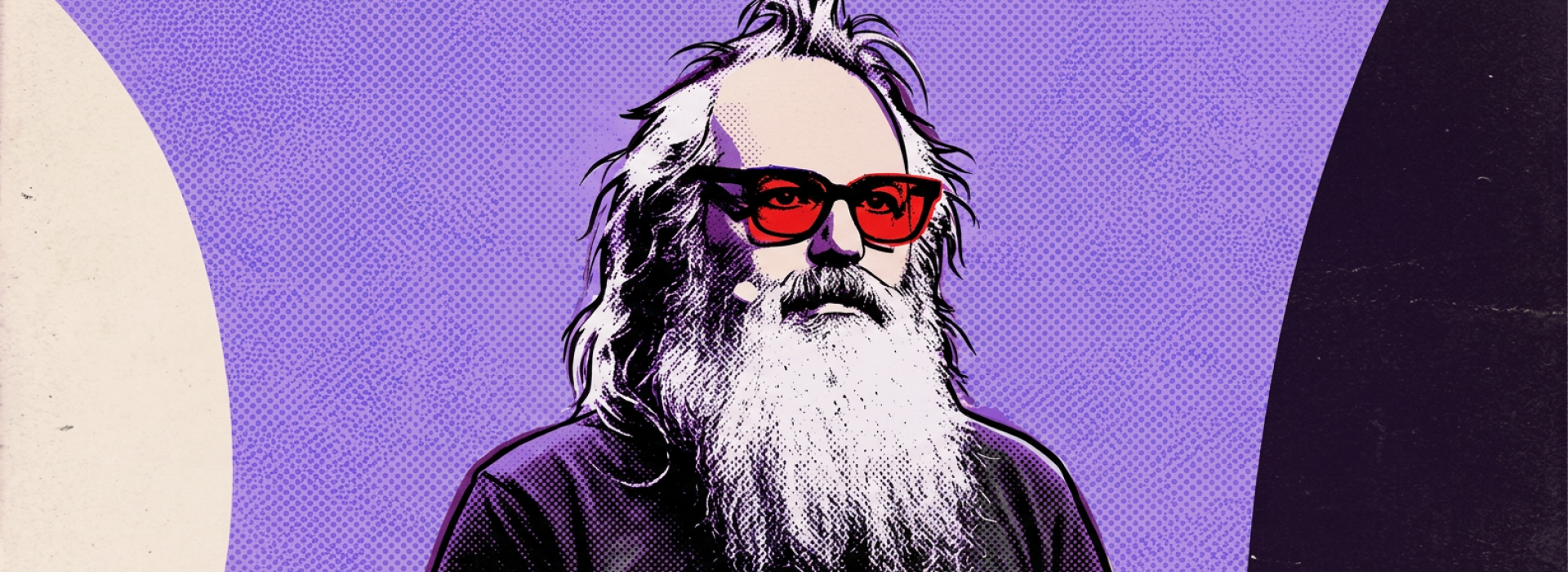
There's an interview I absolutely love between Anderson Cooper and Rick Rubin. You may have seen it circulate online. Cooper is trying to figure out what exactly Rick Rubin does. Rubin, one of the most prized creatives of our time, has spent his career producing some of the most iconic albums in modern music, across genres, across decades, but he doesn't play instruments. He doesn't engineer. He doesn't write the songs.
Cooper pushes him on it. You must know something. And Rubin's answer is disarmingly simple: he knows what he likes and what he doesn't like. He's decisive about it. And his confidence in that taste, his ability to express what he feels, has proven helpful for artists.
That quote has been rattling around in my head for a while now. Because something similar is happening in creative work. And it happened to me.
The Old Job
Not long ago, my title was Director of Front-End Development at Futureman. My world was code. Highly specialized, deeply technical. Animation, WebGL, experiential, interaction design. I built websites. Good ones. But the scope of what I could contribute to was defined almost entirely by what I could build with my hands on a keyboard.
That's not a complaint. I loved that work and still do. But the nature of the role meant I was brought in when the project needed my specific technical skill set, and I stepped out when it didn't. The value I brought was tied directly to the code I could write.
The New Job
Today my title is Director of AI. My core responsibility is defining how our agency approaches AI. The guidelines, the toolset, the internal standards, while simultaneously building the internal agentic AI systems we believe are the future of creative work.
But here's the thing about building tools that touch every part of the business: they pull you into them. That expanding scope has drawn me into the broader pool of work Futureman does. Video production, design, contract creation, pitch work. Parts of the agency I used to orbit but rarely touched directly. Now I'm in the room for all of it.
The threshold to test an idea has collapsed. A rough cut, a comp, a concept frame, a draft layout. Work that used to require a full production cycle to evaluate can now be sketched in an afternoon. What I bring to those rooms isn't a replacement for the specialists who own that craft. It's taste. Judgment. The ability to look at something and know quickly and decisively whether it's working or not, and why.
That's the Rick Rubin thing. That's what clicked.
Taste as a Skill Set
Rubin doesn't succeed in spite of not being technical. He succeeds because he's freed from the technical. His entire value is in the listening. In knowing what's good, what's close, and what's not there yet. He can walk into any genre, any studio, any artist's process, because his contribution isn't tied to an instrument. It's tied to judgment.
AI is doing something similar across creative industries, and it's worth being precise about how. It isn't replacing technical people. It's giving them more shots on goal. The animators who understand timing now have a faster path to direct video. The designers who understand hierarchy can pressure-test more layouts before committing. The developers who understand systems can build platforms that make everyone around them better. The craft still belongs to the specialists. AI just lets more ideas reach them in a state where their craft can do its real work.
The sticking point isn't what software you know anymore. It's whether you can identify good work and build on it.
What This Means for the Work
This isn't just my story. It's happening across Futureman, and the industry as a whole.
The roles are blurring at the edges. The people who thrive aren't the ones clinging to their lane, and they aren't the generalists pretending craft doesn't matter. They're the ones whose taste and creative instincts translate across mediums while their depth in something specific keeps the work honest.
What AI can't do is decide whether the output is any good. Whether it serves the brand. Whether it moves the work forward or just fills a deliverable. That's human work, and it turns out it's the most valuable work in the room.
At Futureman, we've leaned into this hard. The agentic systems we're building internally are specifically designed to lower the technical floor so the creative ceiling can rise. We want our people spending their energy on ideas, on creative direction, on the kind of qualitative judgment that no model can replicate. The systems handle the heavy lifting so the specialists can spend more time being specialists.
The Evolution
My career went from writing animation code to directing AI strategy for an entire agency. That sounds like a pivot, but it doesn't feel like one. It feels like the same instincts, the same eye for what works, the same obsession with craft. Just applied without the old constraints.
Rick Rubin walks into a room and makes the album better without touching an instrument. That's the energy. Not because the instruments don't matter, they do, profoundly. But because someone has to be the one who listens, who decides, who pushes the work past good enough.
The tools are everywhere now. The question is whether you've developed the judgment to use them well.